
Starting pitchers have been re-engineered to support a good bullpen
The tail is wagging the dog

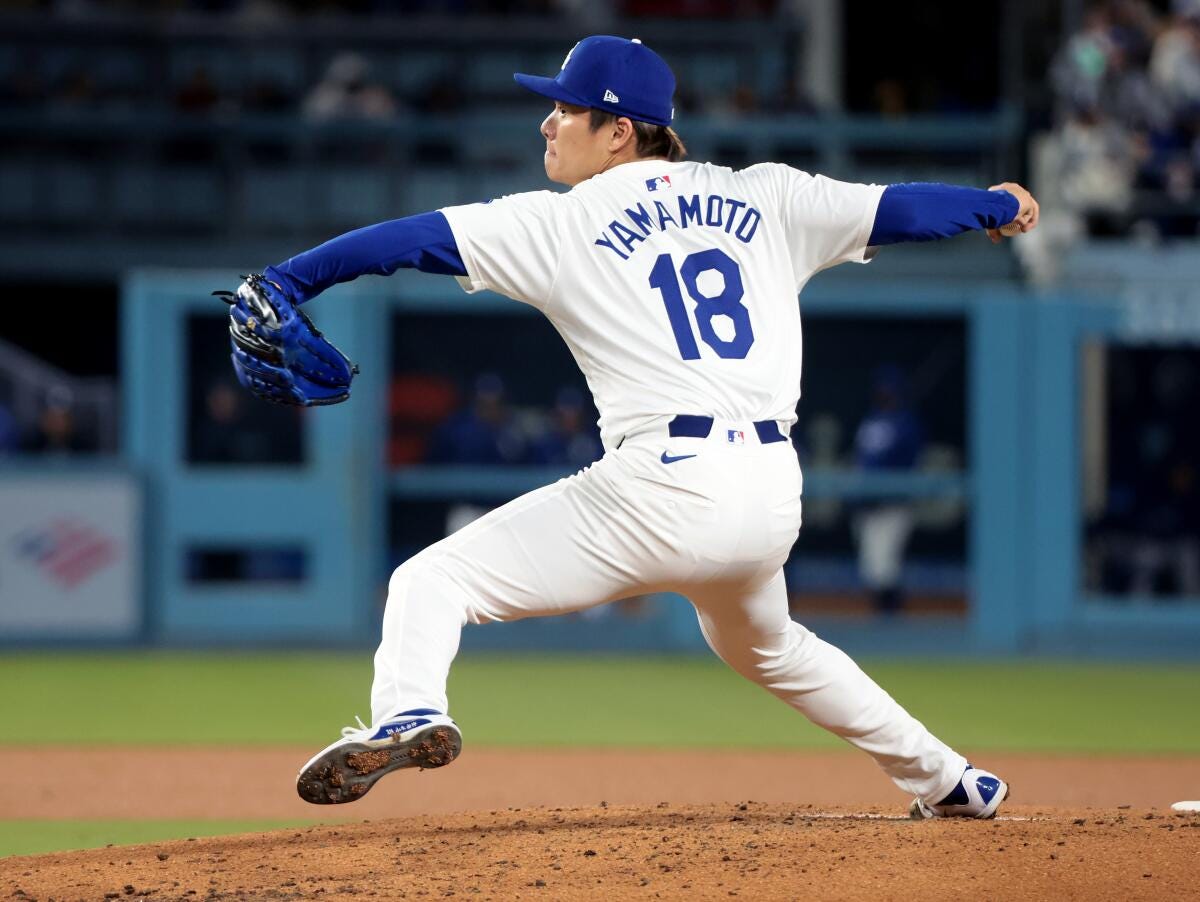
Did your favorite team make a move to shore up its bullpen at the trading deadline? If it did, then your team is still in the running for a playoff spot. Or at least thinks it’s still in the running for a playoff spot. The 2025 MLB trading deadline displayed some teams fully buying into the Dodgers approach to pitching for playoff bound teams. That approach in 2024 helped bring Los Angeles a World Series title. The approach is simple. Compile a great bullpen and during the season have starting pitchers go as long as possible to save reliever arms and innings. Talk about flipping the script!
In the playoffs starting pitchers are not expected to go past five innings
Today’s MLB hitters are adaptive and too good for most starting pitchers to be seen by them a third time in one game. Five innings of good pitching will get a pitcher through the lineup twice (18 batters over 15 outs). Good playoff bullpens can handle four or more innings per game over a series given that there are lots of scheduled days off. It’s interesting that playoff baseball is played very differently than regular season baseball given that there are fewer days off than in a playoff series. Rosters are built differently for regular season baseball than for the postseason. Three good starters are all that’s needed in playoff baseball. That does not work in the regular season.
Regular season starters that are unable to pitch six innings end up overtaxing the bullpen. This season the average MLB start is 5 2/3 innings, which means there are plenty of starting pitches who go fewer than that, and a few that go beyond six innings. Doesn’t it seem that the last out for a starter in the sixth inning is one of the hardest to get in the entire game?
When a bullpen must pick up four or more innings repeatedly (as in the case of the New York Mets this season), it wears out those dynamic bullpen arms quickly and the team must patch holes by bringing up pitchers who can go a few innings right away. It’s become standard operating procedure to have pitchers shuttling between being on the active MLB roster and after pitching being DFA’d (Designated for Assignment), only to be brought back sooner than later. There are rules about that that I won’t get into but you can if you like.
Save your bullets
It’s not only the Dodgers who’ve adopted the ‘we can get by without five starting pitchers’ mantra. The Astros have done the same for years. Yet both the Dodgers and Astros DO have at least three very capable starters even if those starters are injured during the regular season. All they need to do is be ready to pitch in the postseason. And dominate!
I’ve already written that starting pitchers have been devalued. And that devaluation continues to be displayed when it comes to postseason baseball. Teams sometimes will use two ‘bulk’ pitchers instead of an ‘opener’ who’s a good relief pitcher and better able to get those three first inning outs off the top of the lineup. Going with a five-inning pitcher and a three plus inning pitcher saves your best relievers from having to pitch too often and then being exhausted for the playoffs. It’s a delicate dance for a manager to choreograph.
The trend is fewer big contracts for starting pitchers
It was only last year that the Dodgers signed Japanese star Yoshinobu Yamamoto to a 12-year $325 million contract. The Dodgers also signed starter Tyler Glasnow to a five-year $136 million extension also in 2024. The Red Sox inked lefty Garret Crochet to a six-year $170 million extension after signing him in free agency after the 2024 season. While that may seem like the opposite of a trend away from big contracts for starters, all are young pitchers, and the Dodgers and Red Sox are exceptions. The Tigers are reportedly not going to sign defending Cy Young winner Tarik Skubal to a long-term contract. Skubal is 28 years old and likely to receive a handsome offer from several MLB teams who can afford him.
The Padres held on to free-agent-to-be Dylan Cease for their playoff drive this season. Cease will be 30 next season and it’s debatable if he will receive a five year or more deal from any team. Shorter more lavish contracts like the one Mets POBO David Stearns gave to Sean Manaea (three years $75M) are popping up more frequently and only the most elite starting pitchers are being offered long-term contracts. It’s simply too risky and very often does not pay off since pitchers seem to get injured more than they ever have before.
The Phillies and Padres have had excellent starting pitching that has held up to injuries as the season has entered its final 50 games. But the Padres bullpen is deeper and better than Philly. Which team is better suited for success in this year’s playoffs? Phillies’ Zack Wheeler is in the late stages of his contract and his career. He signed a big $126 million three-year extension in 2024 contract that has worked out well for GM Dave Dombrowski. The other stalwart starters this season Ranger Suarez and Christopher Sanchez were signed to four-year contracts that look very attractive so Dombrowski may be heading down the same route as the Dodgers and Mets with shorter contracts and more quality relievers.
The salary differences between quality relievers and mid-rotation starters have been shrinking in recent years. That’s a sign of things to come. I’ve come to believe that MLB teams would prefer to have nine pitchers who can pitch at least three innings every other day if necessary and four ‘light’s out’ relievers for the end of games. It’s not what fans are asking for but seems like it’s going to be what they’re going to get.
About the Author: Mark Kolier along with his son Gordon co-hosts a baseball podcast called ‘Almost Cooperstown’. He also has written baseball-related articles that can be accessed on Medium.com and now Substack.com.
Loved this—clear, human, and grounded. You connected the dots without dumbing anything down, which is rarer than it should be. My big takeaway: trade-offs are everywhere; your framing makes them visible. Curious: if you had to update this in six months, what metric would you watch first?